Jacques Saunière
Jacques Saunière, the revered curator of the Louvre Museum and Grand Master of the Priory of Sion, is the central figure whose murder sets the entire plot of The Da Vinci Code in motion. His dying act—staging his own body as a replica of Leonardo da Vinci's Vitruvian Man, drawing a pentacle on his abdomen, and leaving a cryptic message in code—is a desperate, ingenious final communication designed to pass on the Priory's most guarded secret: the location of the keystone that leads to the Holy Grail. Saunière's death is not merely a crime but a calculated sacrifice that forces his estranged granddaughter, Sophie Neveu, and the symbologist Robert Langdon into a perilous quest, revealing his hidden role as the protector of a secret bloodline and the architect of a centuries-old conspiracy.
Identity and Background
Jacques Saunière was the renowned curator of the Louvre Museum in Paris, a position he held for twenty years. During his tenure, he helped the Louvre amass the largest collection of goddess art on earth, including labrys axes from Delphi, gold caducei wands, and sistrum rattles. He was considered the premiere goddess iconographer on earth, with a personal passion for relics relating to fertility, goddess cults, Wicca, and the sacred feminine. His books on the secret codes hidden in the paintings of Poussin and Teniers were among Robert Langdon's favorite classroom texts. Unbeknownst to the public, Saunière was also the Grand Master of the Priory of Sion, a secret society founded in 1099 that guards the secret of the Holy Grail. His membership in this brotherhood placed him in a lineage of Grand Masters that included Leonardo da Vinci, Botticelli, Sir Isaac Newton, and Victor Hugo. Saunière was also the grandfather of Sophie Neveu, a relationship that became strained after she witnessed a Hieros Gamos ritual in his Normandy château ten years before the novel's events.
Life and Plot Trajectory
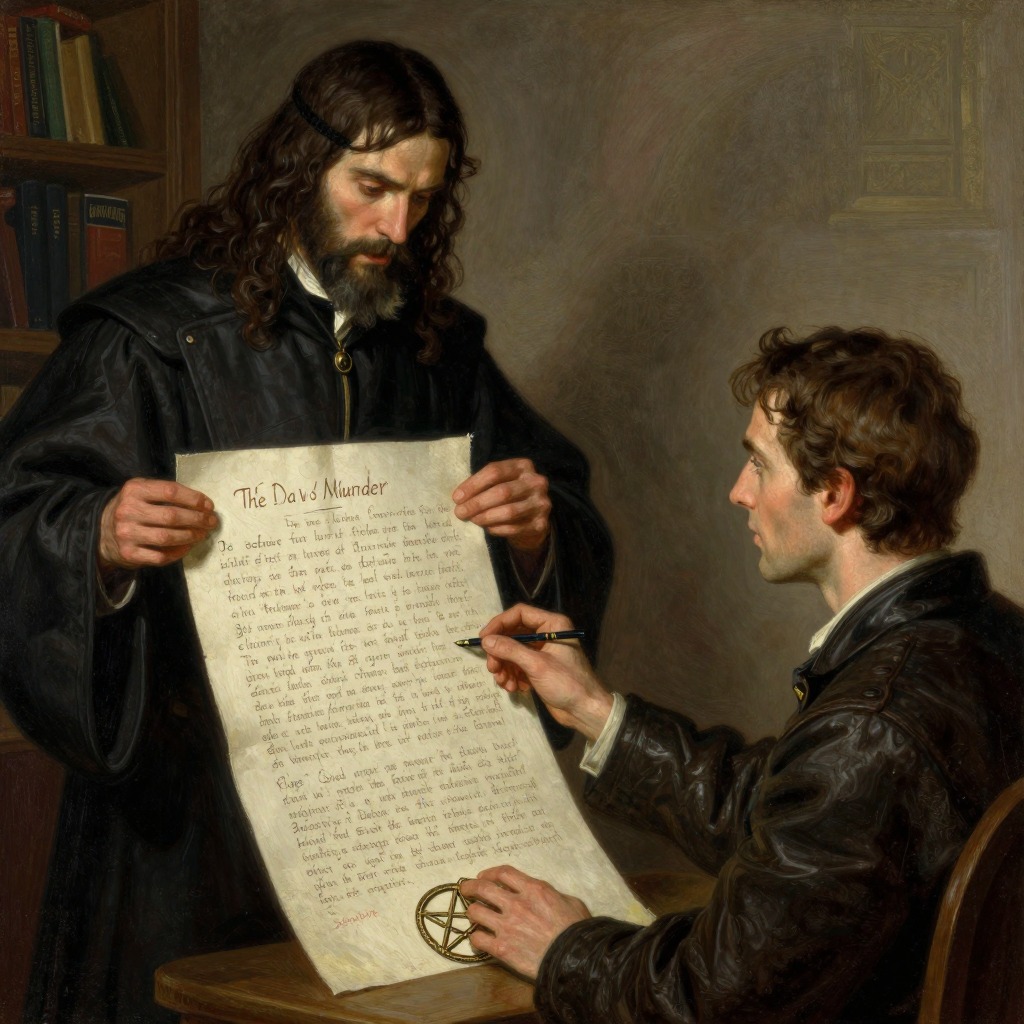
Saunière's life is defined by his dual roles as a public art scholar and a secret guardian of the Priory's most sacred trust. He raised Sophie after her parents died in a car accident, but their relationship fractured when she discovered his involvement in the secret society's rituals. For a decade, he sent her unopened letters, desperately trying to explain himself. On the night of his death, he had arranged to meet Robert Langdon for drinks after Langdon's lecture at the American University of Paris, a meeting prompted by Langdon's manuscript on goddess worship, which Saunière had received from his editor. Before the meeting could occur, Silas, acting on orders from the Teacher, confronted Saunière in the Louvre's Grand Gallery. Shot in the stomach, Saunière knew he had only fifteen to twenty minutes to live. In that time, he barricaded himself inside the gallery, stripped naked, arranged his body in the pose of Da Vinci's Vitruvian Man, drew a pentacle on his abdomen with his own blood, and used a black-light stylus to write a coded message on the floor. This final act was a meticulously planned treasure hunt for Sophie, designed to lead her to the keystone and, ultimately, to the truth about her family.
Key Actions and Objectives
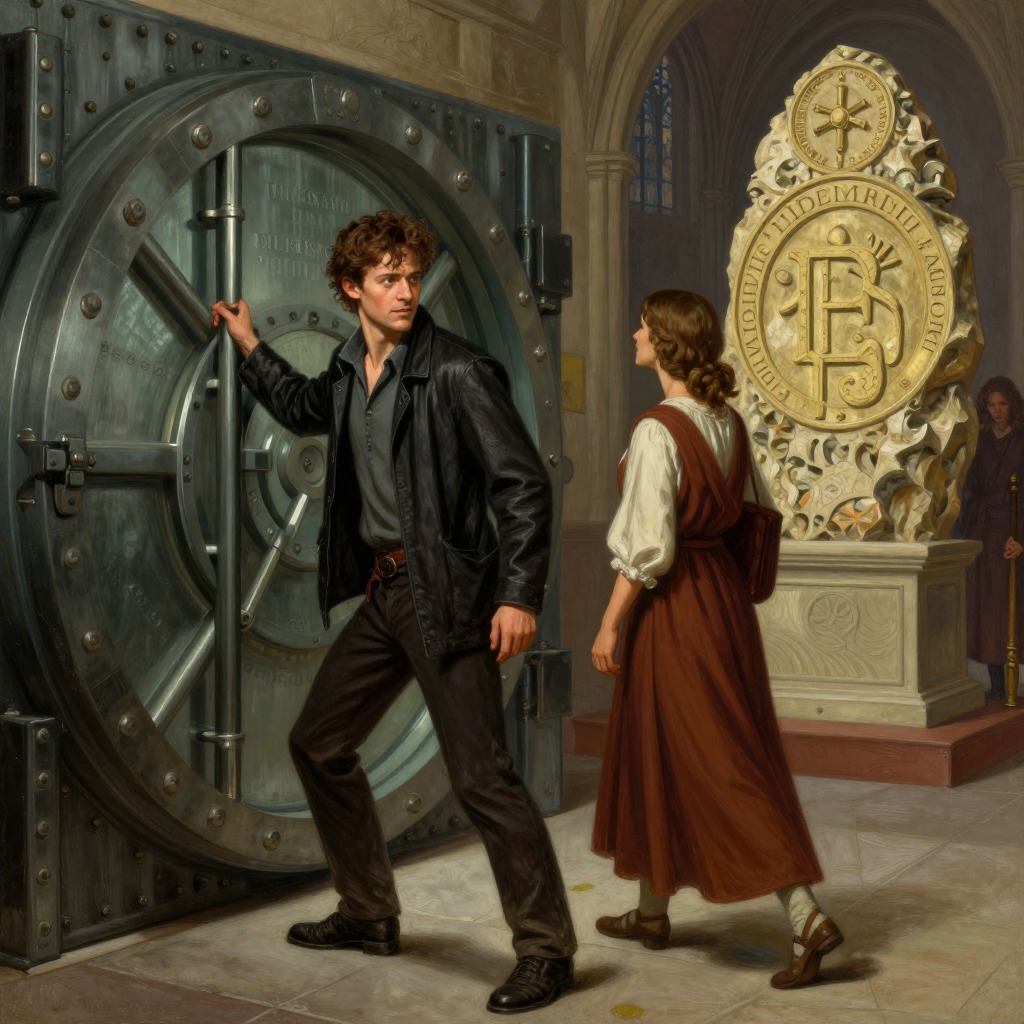
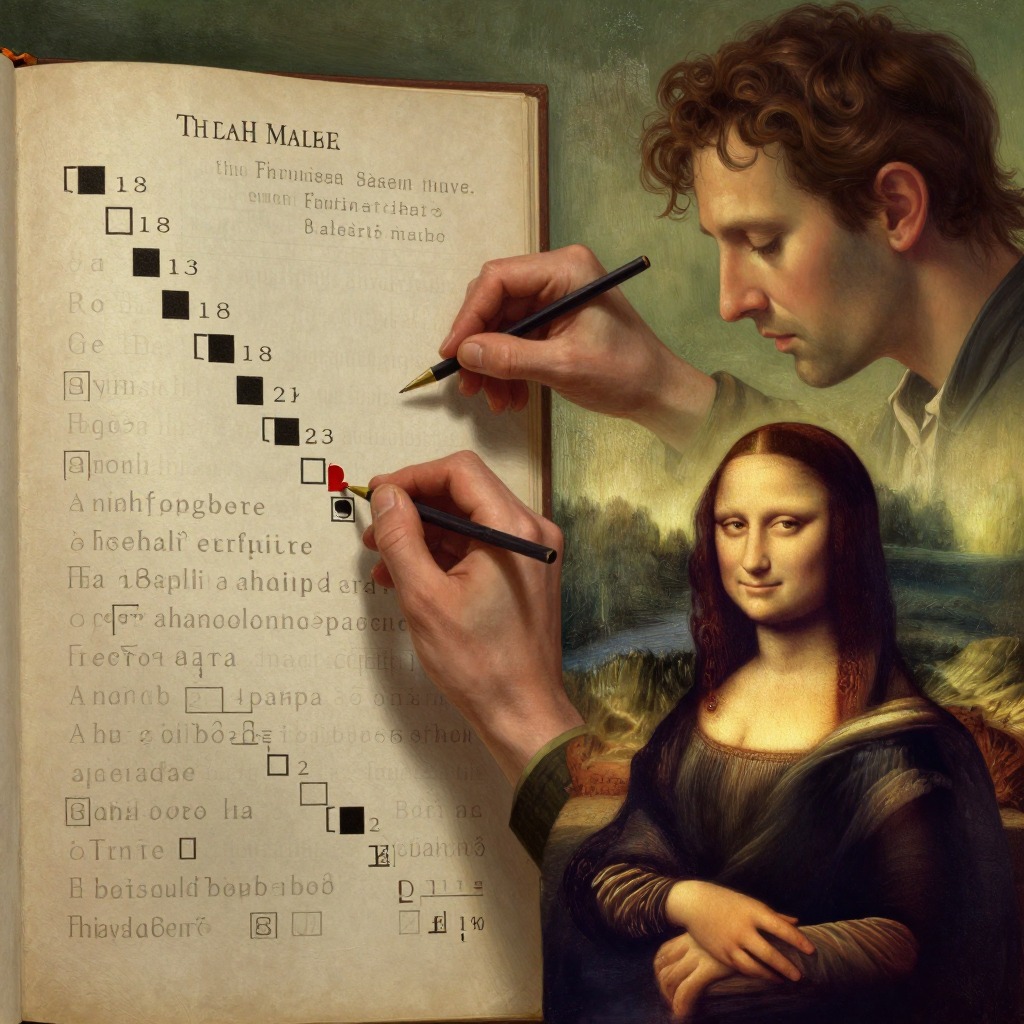
Saunière's primary objective in his final moments was to pass on the Priory's secret to Sophie, bypassing the compromised chain of command. He knew that the three sénéchaux had been killed and that he was the last remaining link. His actions were a masterclass in coded communication. He wrote a scrambled Fibonacci sequence (13-3-2-21-1-1-8-5) to ensure cryptographers would be called in, thus involving Sophie. He wrote the anagram "O, Draconian devil! Oh, lame saint!" which decodes to "Leonardo da Vinci! The Mona Lisa!" to direct her to the painting. He included the postscript "P.S. Find Robert Langdon," using his pet name for her, "Princesse Sophie," to ensure she knew the message was for her. He also hid a gold key behind the Madonna of the Rocks painting, which, when combined with the Fibonacci sequence as the account number, opened a safe-deposit box at the Depository Bank of Zurich containing the keystone—a cryptex designed by Leonardo da Vinci. This cryptex, in turn, held a map to the Holy Grail. Saunière's actions were not random; they were a deliberate, multi-layered puzzle designed to test Sophie's worthiness and to ensure the secret would only be revealed to the right person.
Relationships and Conflict
Saunière's most significant relationship was with his granddaughter, Sophie. After her parents' death, he raised her, teaching her codes, puzzles, and a love for art. However, their bond was shattered when Sophie, returning home early from university, witnessed a Hieros Gamos ritual in the basement of his Normandy château. She saw him, naked and masked, participating in a sacred sexual ceremony. Horrified, she fled and cut off all contact for ten years. Saunière never stopped trying to reach her, sending letters and packages that she left unopened. His final phone message to her, on the day of his death, pleaded for her to call him, saying he needed to tell her the truth about her family. This estrangement was the central conflict of his personal life, and his dying act was an attempt to bridge that gap and entrust her with the legacy he had been forced to keep secret. His relationship with the Priory of Sion was one of ultimate responsibility; as Grand Master, he was the sole guardian of the secret of the Holy Grail, a burden that shaped his entire life and ultimately led to his death.
Change and Ending
Saunière's death is the catalyst for the entire novel, but his legacy is one of profound change. He transformed from a distant, secretive grandfather into a heroic figure who sacrificed himself to protect a truth of immense historical and spiritual significance. His final message, decoded by Langdon and Sophie, revealed that the Holy Grail was not a cup but Mary Magdalene, who bore the bloodline of Jesus Christ. The cryptex he left behind led to a final poem that pointed to Rosslyn Chapel, where Sophie discovered that her grandmother was alive and that she had a brother. More importantly, Saunière's actions revealed that Sophie herself was a descendant of the Merovingian bloodline—the direct lineage of Jesus and Mary Magdalene. His death, therefore, was not an end but a beginning, forcing Sophie to confront her true identity and the responsibility that came with it. The novel concludes with Langdon realizing that the Grail's final resting place is beneath the inverted pyramid in the Louvre, a location Saunière had chosen to keep watch over the sacred feminine for eternity.
Thematic Significance
Saunière embodies the novel's central themes of secrecy, sacrifice, and the restoration of the sacred feminine. His life and death illustrate the immense power of hidden knowledge and the lengths to which individuals and institutions will go to protect or suppress it. As a Grand Master of the Priory of Sion, he represents the centuries-long struggle to preserve the truth about Mary Magdalene and the divine feminine against the patriarchal forces of the Church. His use of codes, symbols, and art as a means of communication underscores the novel's argument that history is often written by the victors, and that truth can be hidden in plain sight. Saunière's final act—arranging his body as the Vitruvian Man—is a powerful symbol of the harmony between male and female, a balance that the Priory sought to protect. His death is not a defeat but a triumph of faith and intelligence, ensuring that the secret of the Grail would survive and that the sacred feminine would one day be restored to its rightful place in human consciousness.